
Gypsum Partition vs Brick Wall: Office Renovation Comparison
Choosing between a gypsum partition and a brick wall can make a significant difference to an office renovation project. Installation time, flexibility, wall thickness, finishing, sound control and future layout changes are all important factors. This guide compares the two options to help businesses choose a practical partition solution for an office in Muscat.
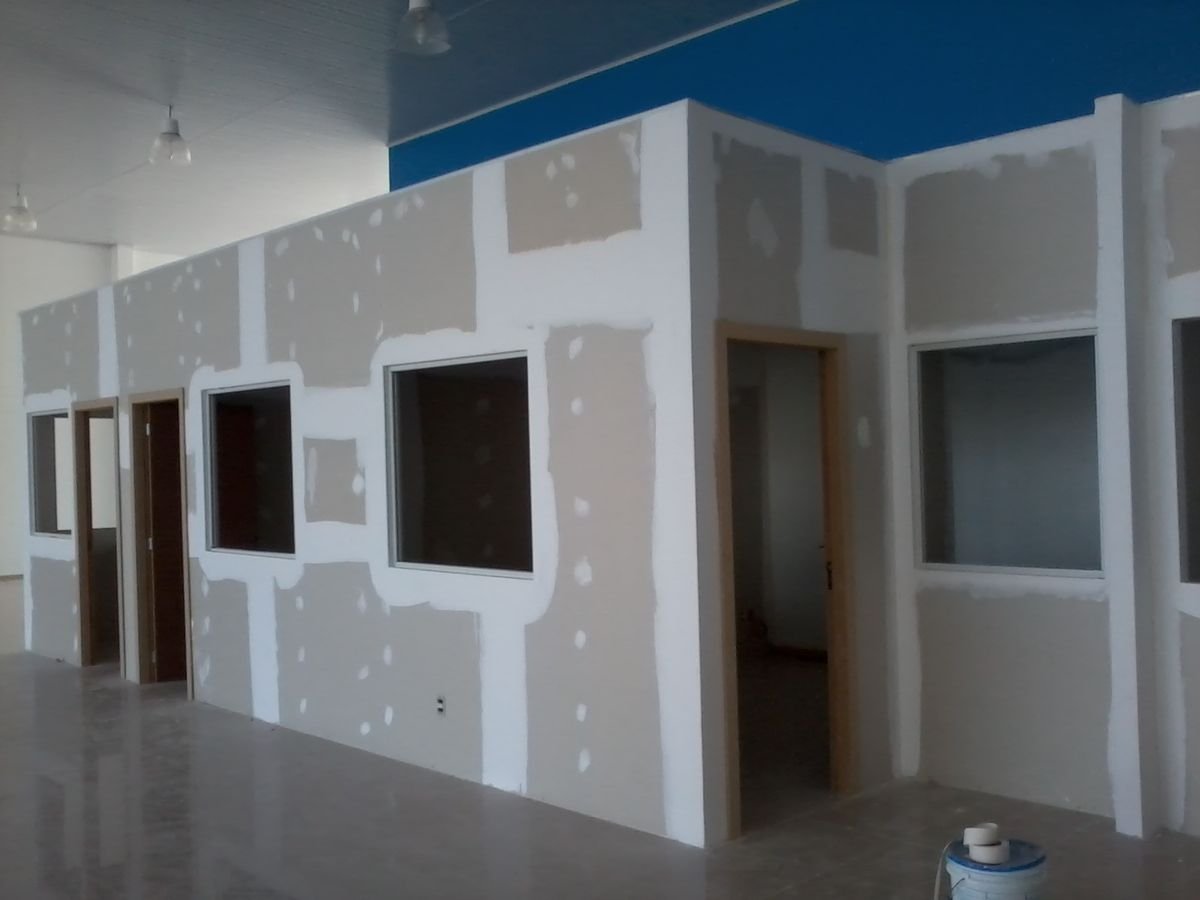
For many internal office renovation projects, gypsum board partitioning can be a practical choice when speed, flexibility, clean finishing and easier future changes are priorities. Brick walls can still make sense when a more permanent masonry construction is required. The right option depends on the room function, building requirements and project specification.
Gypsum Partition vs Brick Wall: What Is the Difference?
A gypsum partition is generally an internal non-load-bearing wall system made using a metal or lightweight framing structure with gypsum boards fixed to the frame. Depending on the specification, insulation can also be installed inside the partition cavity.
A traditional brick or masonry wall uses masonry units and mortar to create a more permanent wall structure. It can provide a solid and durable solution, but office renovation normally involves additional construction work when new walls need to be created, removed or relocated.
The better choice is therefore not simply about choosing the strongest material. For an office, the decision should consider how quickly the space needs to be completed, whether the layout may change later and what level of acoustic, fire or moisture performance is required.
Gypsum Partition vs Brick Wall: At a Glance
The table below provides a practical starting point when comparing the two systems for internal office renovation.
| Factor | Gypsum Partition | Brick Wall |
|---|---|---|
| Installation | Generally faster for internal partitions | Usually involves more masonry work |
| Weight | Lightweight system | Heavier masonry construction |
| Office Layout Changes | Generally easier to modify or reconfigure | More difficult once constructed |
| Finishing | Smooth surface suitable for painting | Usually requires additional finishing |
| Services | Services can be coordinated within the partition cavity | May require additional chasing or construction work |
| Acoustic Performance | Can be improved with suitable insulation and system design | Solid masonry can provide good sound separation |
| Fire Performance | Fire-rated systems are available | Masonry can provide strong fire performance depending on construction |
| Future Renovation | Generally easier to adapt | More disruptive to remove or relocate |
Benefits of Gypsum Board Partitions for Offices
Gypsum board partitions are commonly considered for offices because they provide a clean way to divide internal spaces without using traditional masonry construction for every new room.
Faster Interior Changes
Office renovations often need to be completed with minimal disruption. A gypsum partition system can be installed as an internal dry-wall solution without waiting for traditional masonry construction processes.
Flexible Office Layouts
Businesses may need private cabins, meeting rooms, storage areas or additional workspaces as their teams change. Gypsum partitions can make future layout adjustments more practical.
Lightweight Construction
Gypsum board partition systems are generally much lighter than traditional masonry walls. This can be useful when planning internal office divisions where reducing unnecessary structural load is an important consideration.
Clean, Paintable Finish
Once properly jointed and finished, gypsum board provides a smooth surface that can be painted to match the office interior design.
Easier Service Coordination
Electrical, data and other internal services can often be coordinated within the partition cavity when the system is designed correctly.
Different Performance Options
Partition systems can be specified for different requirements, including acoustic performance, fire resistance and other project-specific needs.
When Can a Brick Wall Be the Better Choice?
Gypsum is not automatically the right solution for every project. There are situations where a traditional masonry wall may be more appropriate, especially when permanence and solid construction are the main priorities.
Permanent Construction
If an internal wall is intended to remain in the same location for many years and future layout changes are unlikely, masonry may be considered as part of the overall construction design.
High-Durability Requirements
Certain areas may require a more robust wall construction because of how the space will be used. The required wall specification should be selected according to the project.
Areas Requiring Masonry
Some locations or applications may require masonry rather than a standard internal gypsum partition. Building conditions, design requirements and technical specifications should be checked before selecting the wall system.
Wet or High-Moisture Areas
Standard gypsum board should not simply be treated as a universal solution for wet areas. Where moisture exposure is expected, an appropriate moisture-resistant system and installation method should be specified.
Where Can Gypsum Partitions Be Used in an Office?
One of the main advantages of office partitioning is the ability to divide a larger workspace into functional areas without completely rebuilding the property.
Private Office Cabins
Create individual rooms for managers, directors or employees who require a quieter and more private working environment.
Meeting Rooms
Separate meeting spaces from open-plan working areas and design the partition specification according to privacy needs.
Reception Areas
Use internal partitions to define reception zones, waiting areas and controlled access points within an office.
Storage Rooms
Create dedicated storage areas without permanently changing the entire office floor plan.
Staff Rooms
Divide space for staff rooms, small kitchens, break areas or other supporting office facilities.
Flexible Workspaces
Create adaptable internal zones that can support changing business requirements and future office reconfiguration.
Is Gypsum Partition Good for Office Sound Control?
Acoustic performance depends on the complete partition system, not simply the presence of gypsum board. Board layers, stud arrangement, cavity insulation, joints, doors and other openings can all influence how much sound passes between rooms.
For a meeting room, HR office, management cabin or other space where privacy matters, the partition should therefore be specified according to the required level of sound control rather than using a basic wall construction without considering acoustics.
A properly designed partition can incorporate insulation within the cavity to improve acoustic performance. The final result, however, depends on the complete wall assembly and workmanship.
Gypsum Partition and Fire Performance
Fire performance is another important consideration in office renovation. Different gypsum board systems can be designed and tested for specific fire-resistance requirements.
If your office project requires a certified fire-rated wall, the complete tested system should be specified rather than assuming that every gypsum board has the same fire performance.
Fire-rated boards, suitable framing, correct joint treatment and properly installed penetrations all form part of the final system. Project requirements should always be checked before installation.
What Affects the Cost of Office Partitions?
The cost of an office partition should not be judged only by the price of the board or bricks. The complete installation can include framing, boards, insulation, jointing, finishing, doors, electrical coordination and painting.
Partition Size
Larger office areas naturally require more materials and installation work.
Board Specification
Standard, moisture-resistant, acoustic or fire-rated systems can have different material requirements.
Insulation
Acoustic or thermal insulation may be added depending on the performance requirements of the space.
Doors & Openings
Doors, glazed sections and other openings can change the total project requirements.
Electrical & Data Work
Office partitions may need coordination for electrical points, switches, lighting controls, data cables and other services.
Finishing & Painting
Joint finishing, surface preparation and final painting should be included when estimating the complete renovation scope.
Which Is Better for an Office: Gypsum or Brick?
For a typical internal office renovation where flexibility, faster installation and a clean finished appearance are important, gypsum board partitioning can be a strong option.
Brick or masonry can be more appropriate when the design calls for permanent construction or when the specific application requires masonry.
The most practical decision is to look at the purpose of each room, the expected lifespan of the layout, technical requirements and future renovation plans before choosing the wall system.
Gypsum partition is often the practical choice when the goal is to create internal rooms quickly and keep the office layout adaptable.
Office Partition Renovation in Muscat
Office layouts in Muscat can need changes as businesses expand, relocate teams or create new meeting and working areas. A partition solution should therefore be selected with both the current office requirements and possible future changes in mind.
Before starting an office partition project, consider the room dimensions, ceiling height, existing electrical and data services, door positions, air-conditioning requirements and the desired finishing level.
For offices that require additional privacy or improved sound control, discuss insulation and partition specifications before installation rather than treating these as an afterthought.
Explore Gypsum Board Partition Solutions in Muscat
If you are dividing an office, creating private cabins or redesigning your workspace, the right partition system can help create a cleaner and more functional interior.
Explore our Gypsum Board Partition service to learn more and discuss your office partition requirements.
Tips Before Installing an Office Partition
Plan the Layout First
Decide where desks, meeting tables, storage, doors and circulation areas will be located before finalising the partition positions.
Check Existing Services
Identify electrical, data, lighting and air-conditioning requirements before closing the partition system.
Decide on Privacy Requirements
Meeting rooms, management offices and HR areas may require more acoustic attention than general workspace partitions.
Choose the Correct Board
Standard board may not be suitable for every environment. Consider moisture, fire, acoustic and durability requirements.
Think About Future Changes
If your business may expand or change its layout, consider how easily the office could be reconfigured later.
Focus on Complete Installation
A good result depends on framing, board fixing, joints, corners, openings and finishing—not just the board material.
Create a More Functional Office with the Right Partition
Compare your space requirements, room functions and future plans, then choose a partition system that fits your office renovation project in Muscat.
Frequently Asked Questions About Gypsum Partitions vs Brick Walls
Is gypsum partition better than a brick wall for an office?
For many internal office renovations, gypsum partition can be practical because it is lightweight, flexible and generally easier to modify. Brick or masonry may be preferable where permanent construction is required. The correct choice depends on the project specification.
Is gypsum partition strong enough for an office?
A properly designed gypsum partition can be suitable for many office applications. The framing, board type, fixing method and reinforcement should be selected according to the intended use, especially where wall-mounted equipment or heavy fixtures are required.
Does gypsum partition reduce office noise?
Gypsum partition systems can provide useful sound reduction when correctly designed. Acoustic performance depends on the complete wall assembly, including board layers, framing, insulation, doors and other openings.
Is gypsum partition suitable for meeting rooms?
Yes, gypsum partitions can be used for meeting rooms. Where privacy is important, the partition should be specified with appropriate acoustic considerations and suitable insulation.
Can electrical cables be installed inside gypsum partitions?
Internal services such as electrical and data cabling can often be coordinated within a gypsum partition cavity. The installation should be planned before the partition is closed.
Is gypsum partition suitable for Muscat offices?
Gypsum board partitions can be used for internal office applications in Muscat. The board and partition specification should be selected according to the location, moisture exposure, acoustic requirements, fire requirements and intended use.
Which is easier to modify later, gypsum or brick?
Gypsum partition is generally easier to modify or reconfigure than a traditional masonry wall. This can be useful for offices where room layouts may change as the business grows.